

I apply a pragmatic, data-informed approach to problem-solving. My focus is connecting key business goals and metrics to scalable initiatives that drive growth, improve efficiency, and deliver measurable ROI. I combine a strong Bias for Action and Executive Presence with the quality required for scalable solutions
Transformation Office Design - Tech Organization
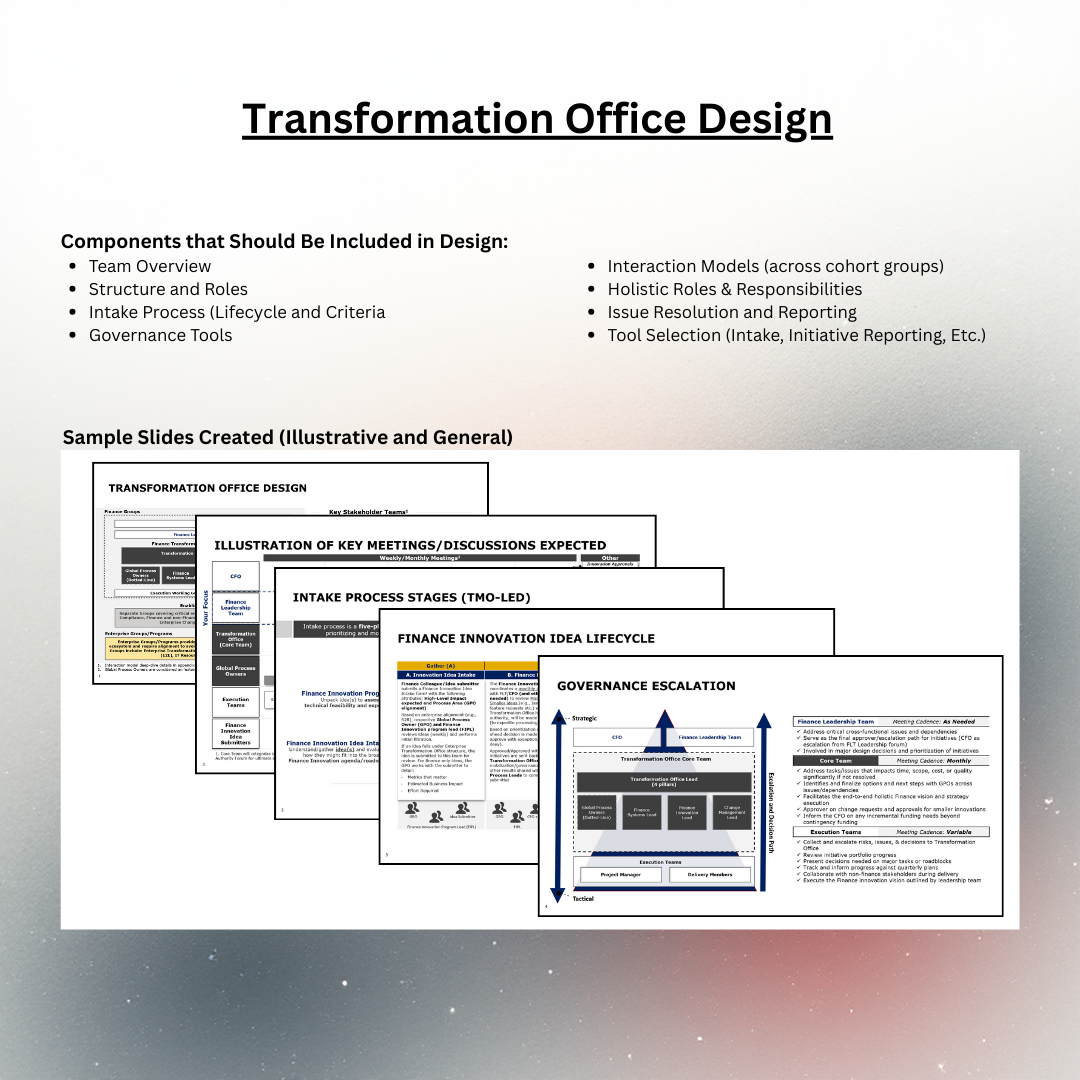
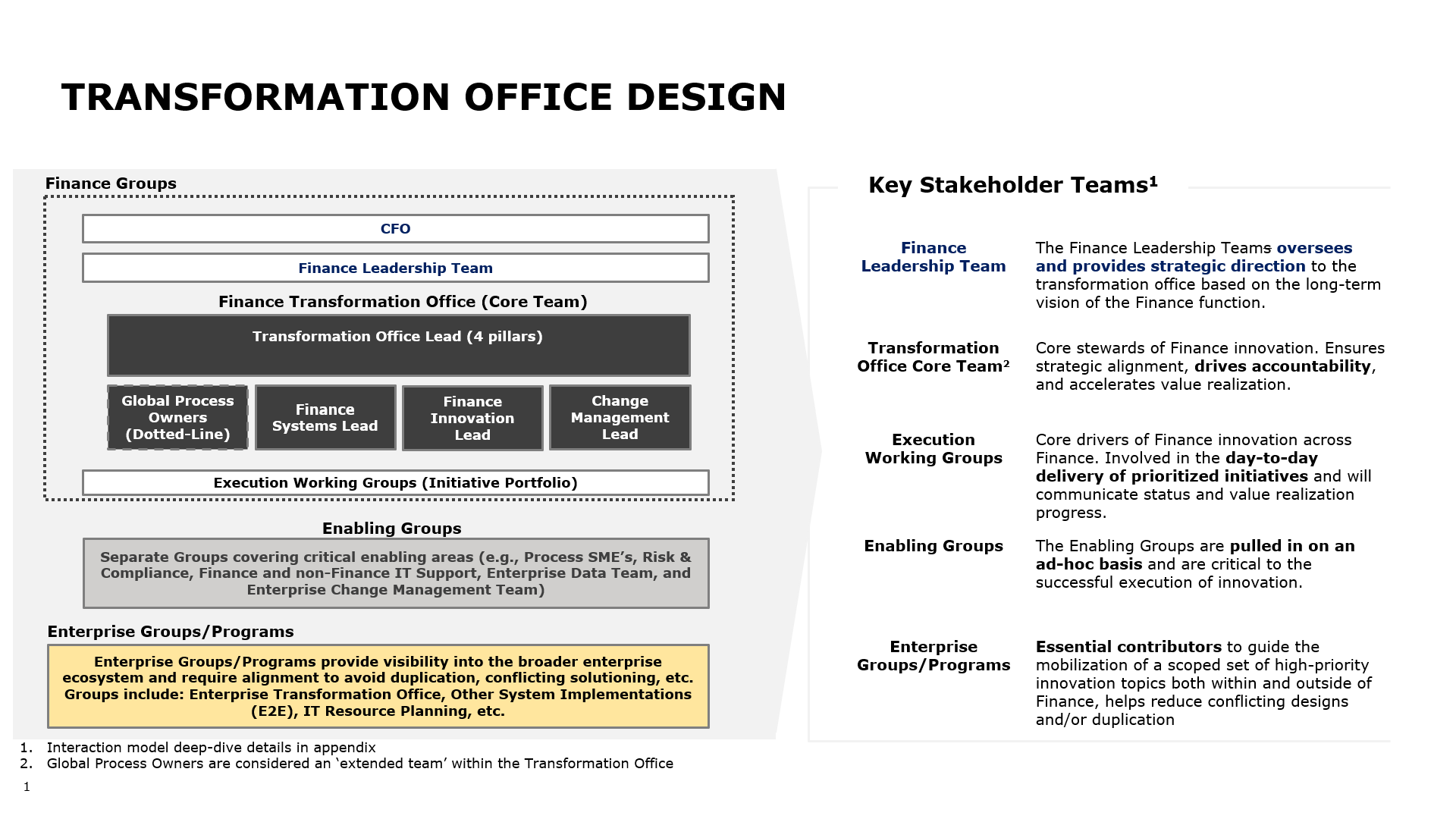
I partnered with a global technology organization that was undergoing a business model shift and was seeking scalable/flexible technologies and a central structure to connect (otherwise disconnected) functions and workflows in transformation efforts. Accordingly, I helped design a Transformation Management Office within Finance (connected to an Enterprise Transformation group). Across two workstreams, I led a small global team, owned senior-level stakeholder alignment, and built the structures needed to harmonize modernization efforts across the enterprise.
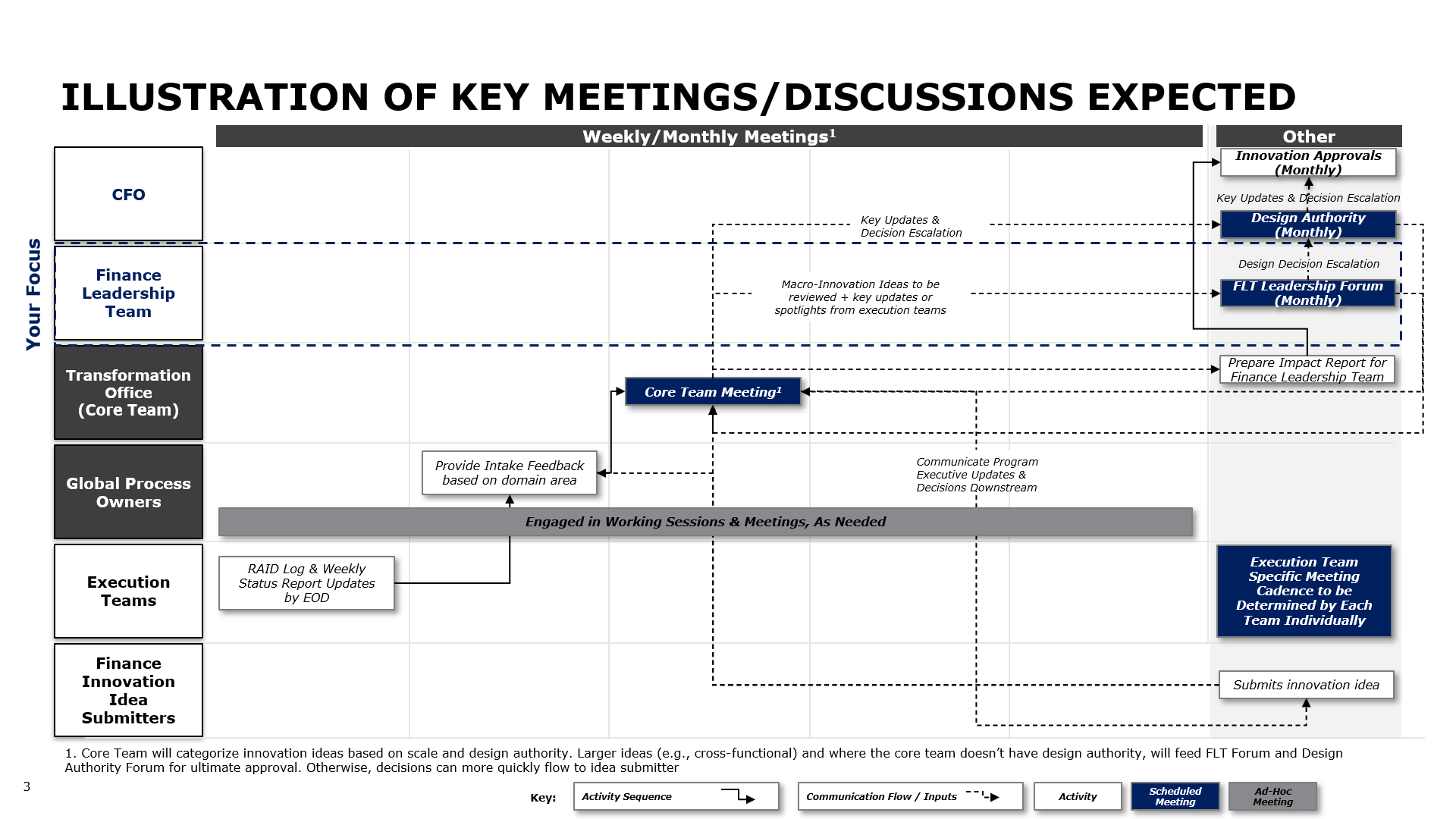
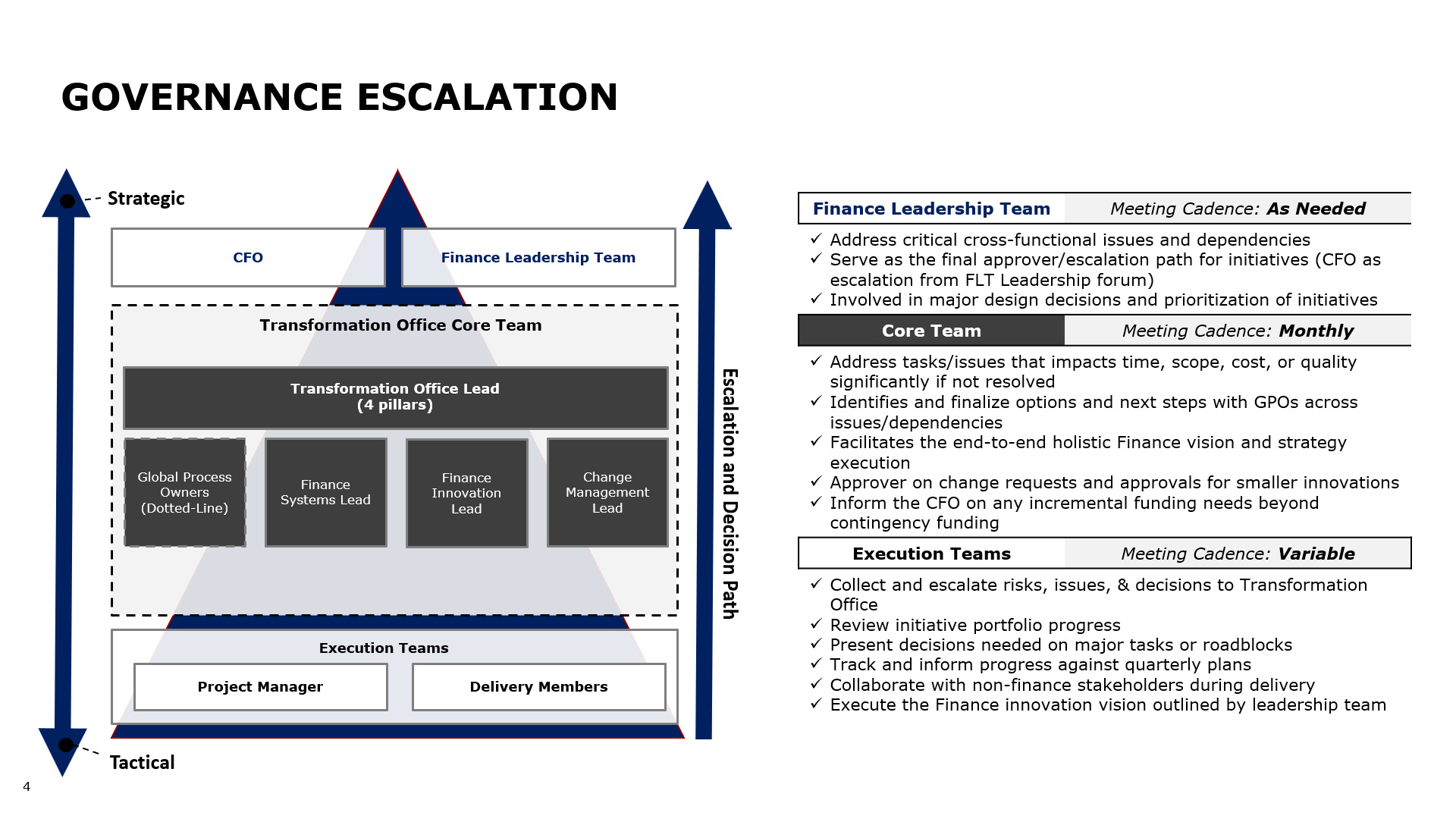
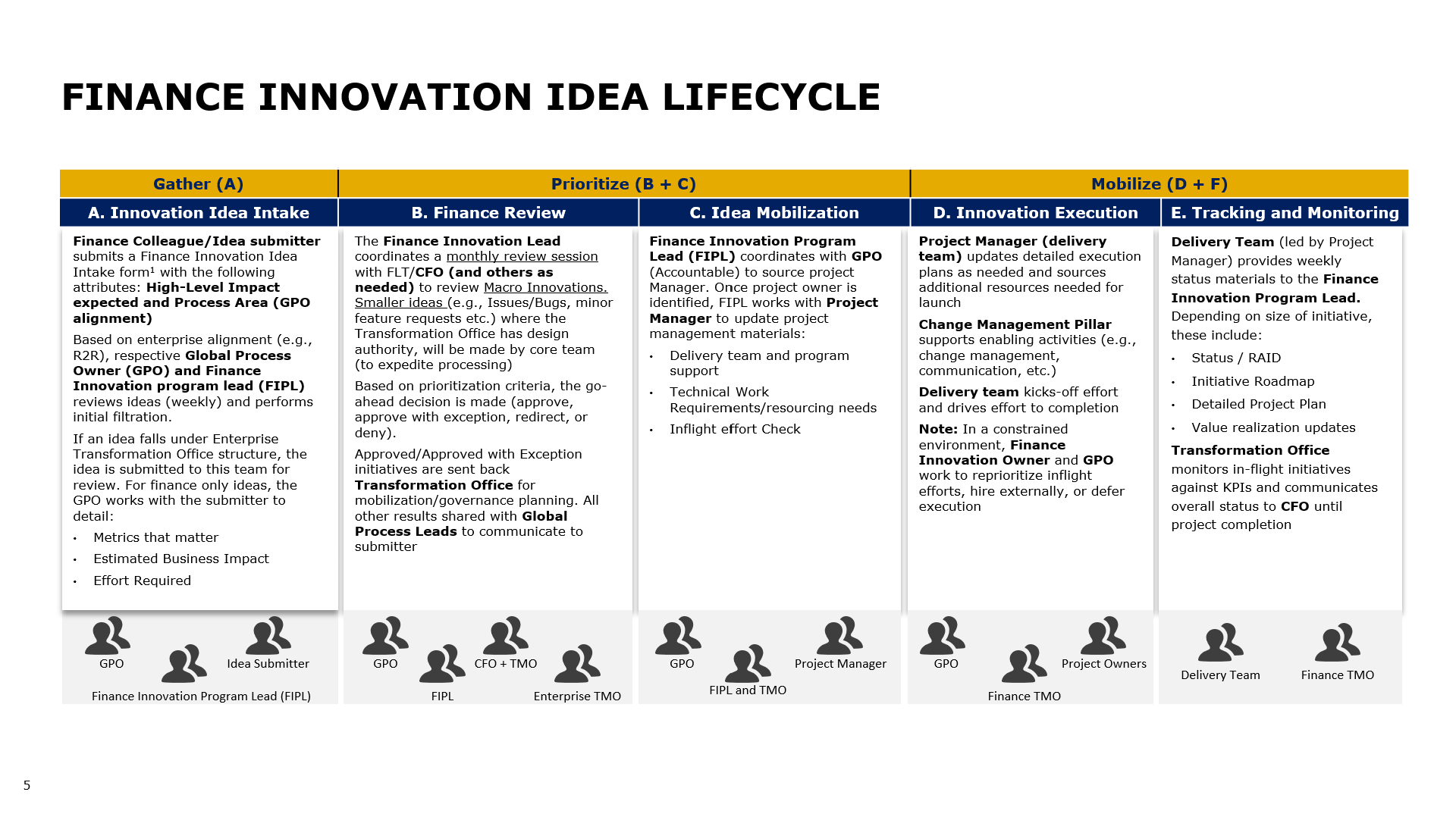
I began by diagnosing why the organization’s innovation efforts were slowing down: siloed teams, conflicting solution designs, inconsistent data definitions, and no common framework for evaluating or prioritizing initiatives. To solve this, I designed an enterprise-connected operating model that clarified roles, decision rights, key forums, escalation paths, and how Finance should collaborate with enterprise initiatives, upstream functions, IT, and other enabling groups.
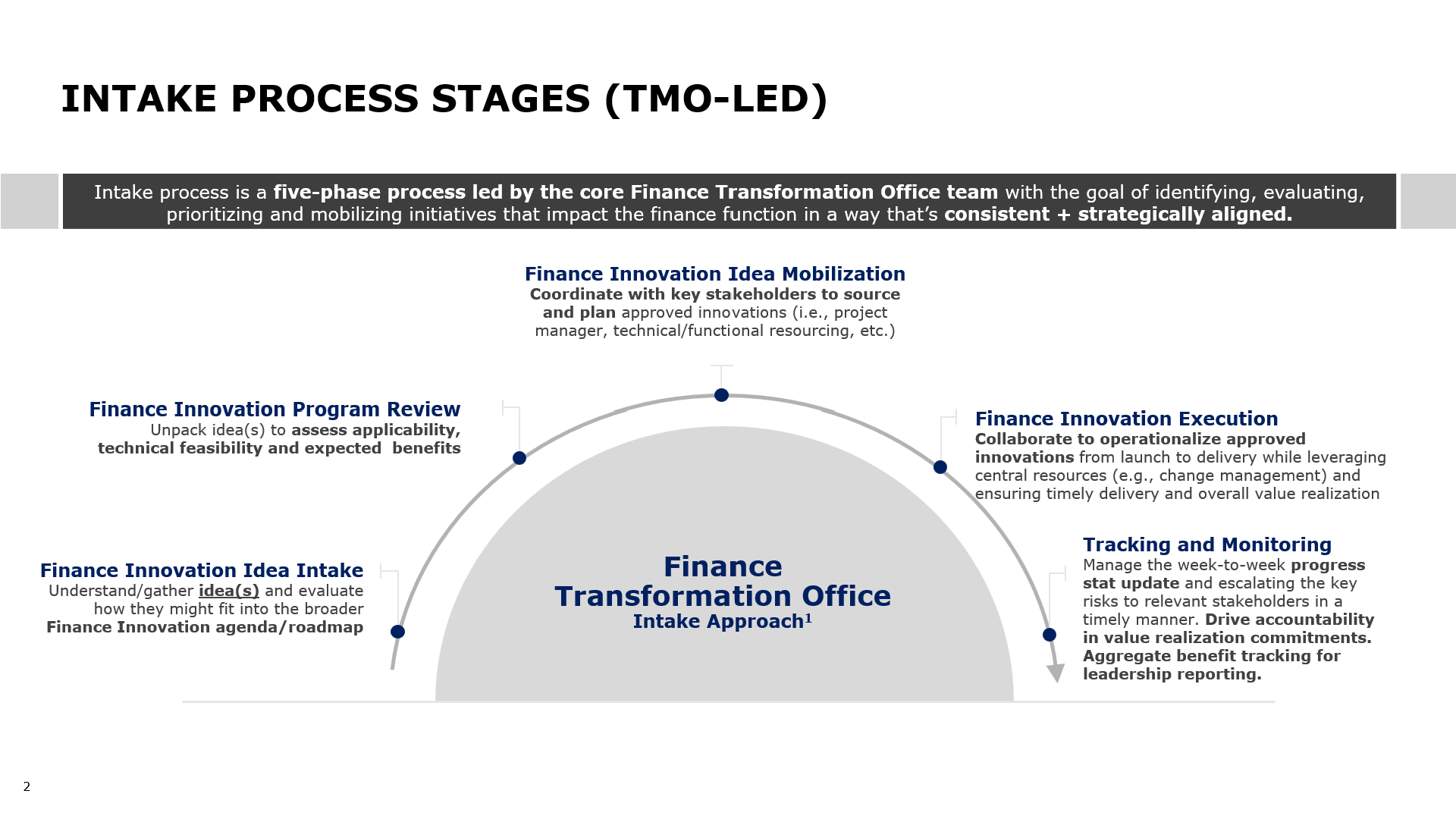
A central component of the program was a new intake and prioritization process. I created scoring criteria, lifecycle stages, and governance templates that equipped leaders with a consistent way to assess impact, sequence work, and accelerate funding for high-value ideas. This helped eliminate rework, increase throughput, and ensure modernization efforts aligned with the broader enterprise strategy.
To drive adoption, I built a communication playbook and roadshow materials that increased visibility, aligned expectations, and empowered teams to pitch, scope, and scale innovation ideas using a self-service toolkit..
The outcome was a unified, scalable Transformation Office model that improved how initiatives moved from concept to execution across Finance, strengthened cross-functional alignment, and established a foundation for more agile, data-driven reporting as the organization prepared for its future-state technology environment
Disclaimer: The case study slides below are generalized and anonymized representations inspired by consulting work I have performed. All client-identifying information, proprietary materials, and actual deliverables have been removed. Examples shown reflect my independently created work.
Mock Case Study - Real-Estate Investment Fund & Operator
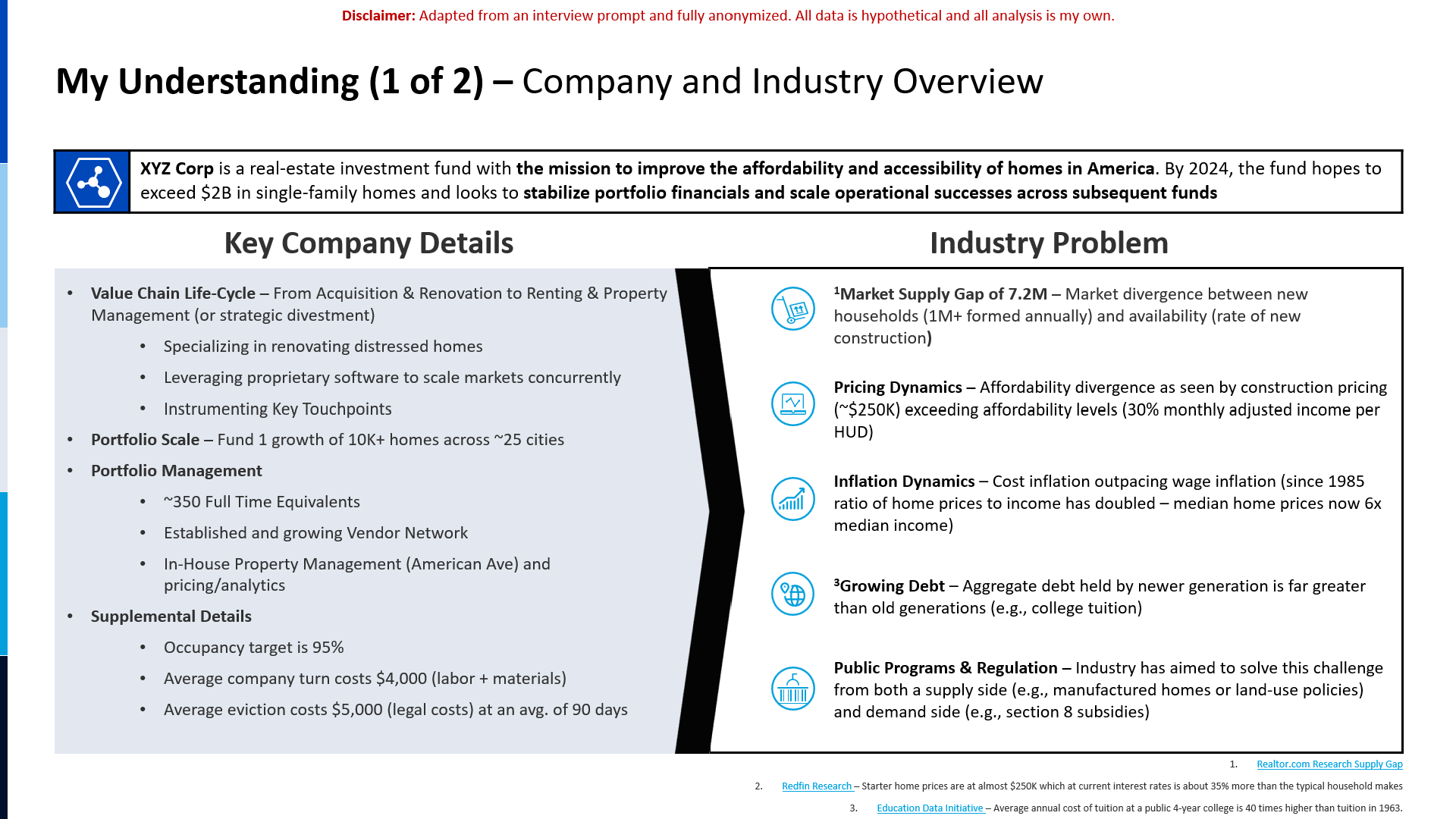
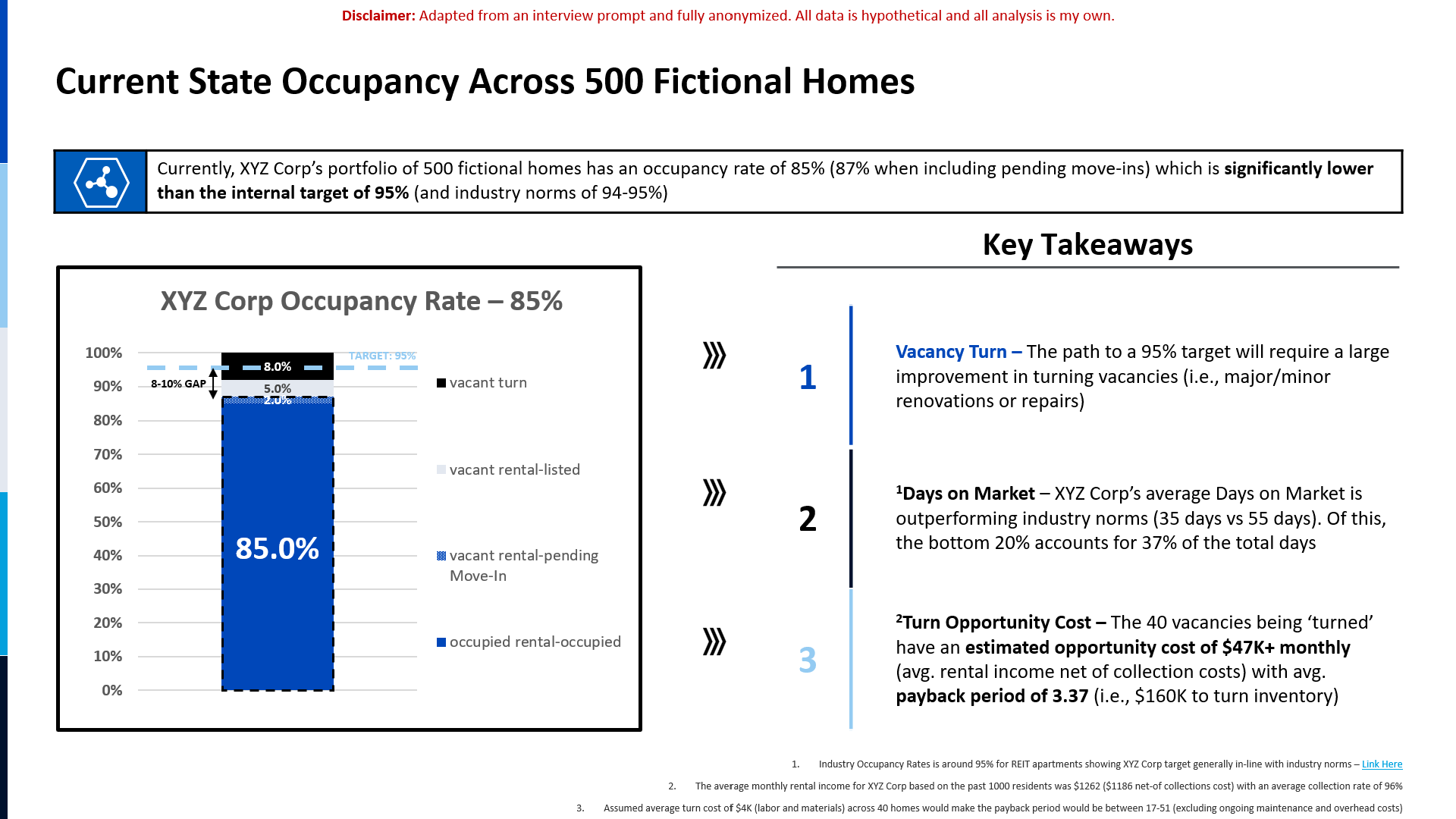
XYZ Corp (Fictitious), a fast-scaling real estate investment fund operating 10,000+ single-family rentals across ~25 U.S. markets, I was asked to analyze a fictional dataset of 500 homes and past residents and articulate the business XYZ Corp should be running to raise occupancy from 80% to the company’s 95% target. The exercise required blending data analysis, tenant-quality assessment, operational diagnostics, and strategic recommendations grounded in XYZ Corp’s operating model and unit economics.
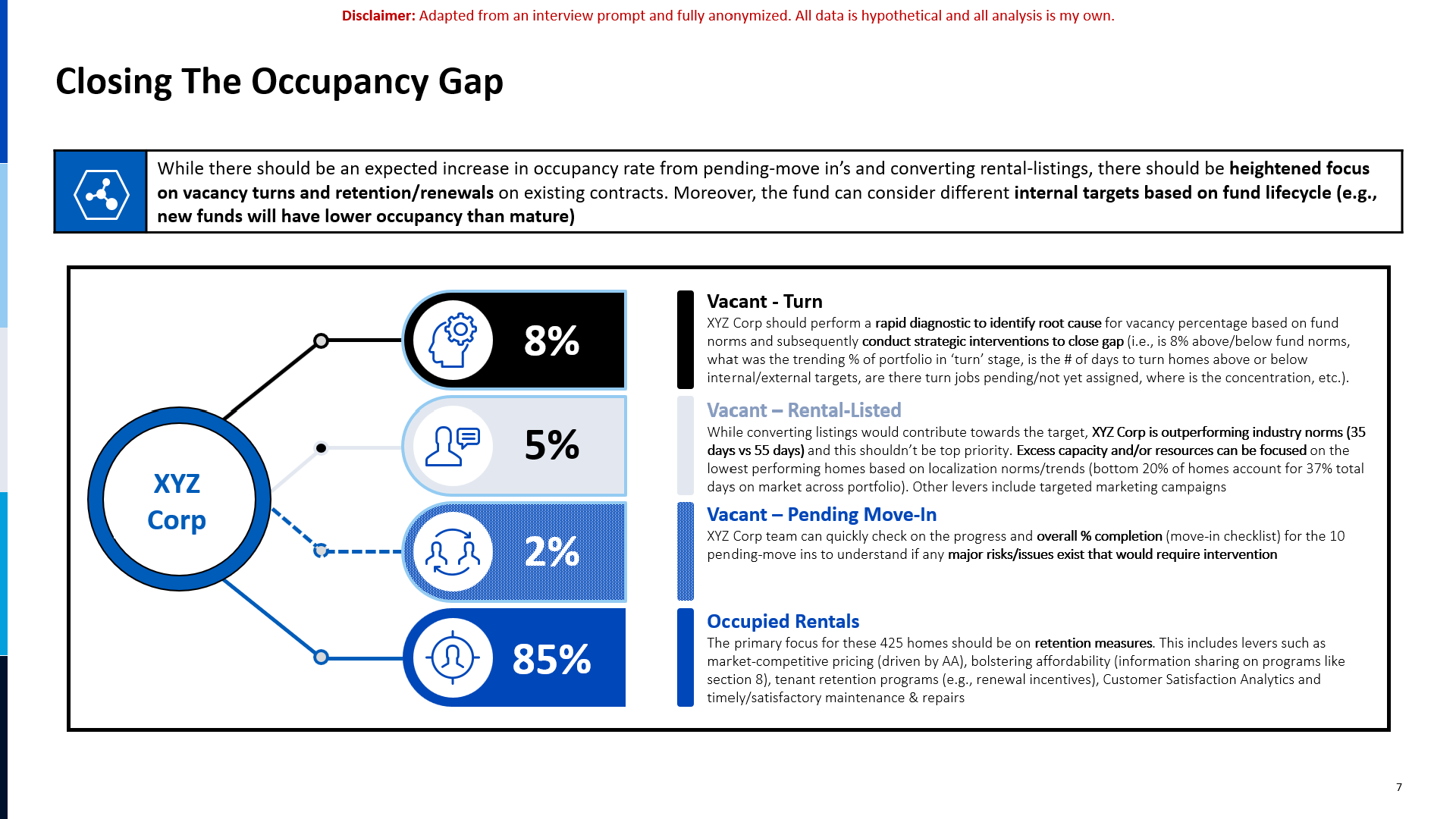
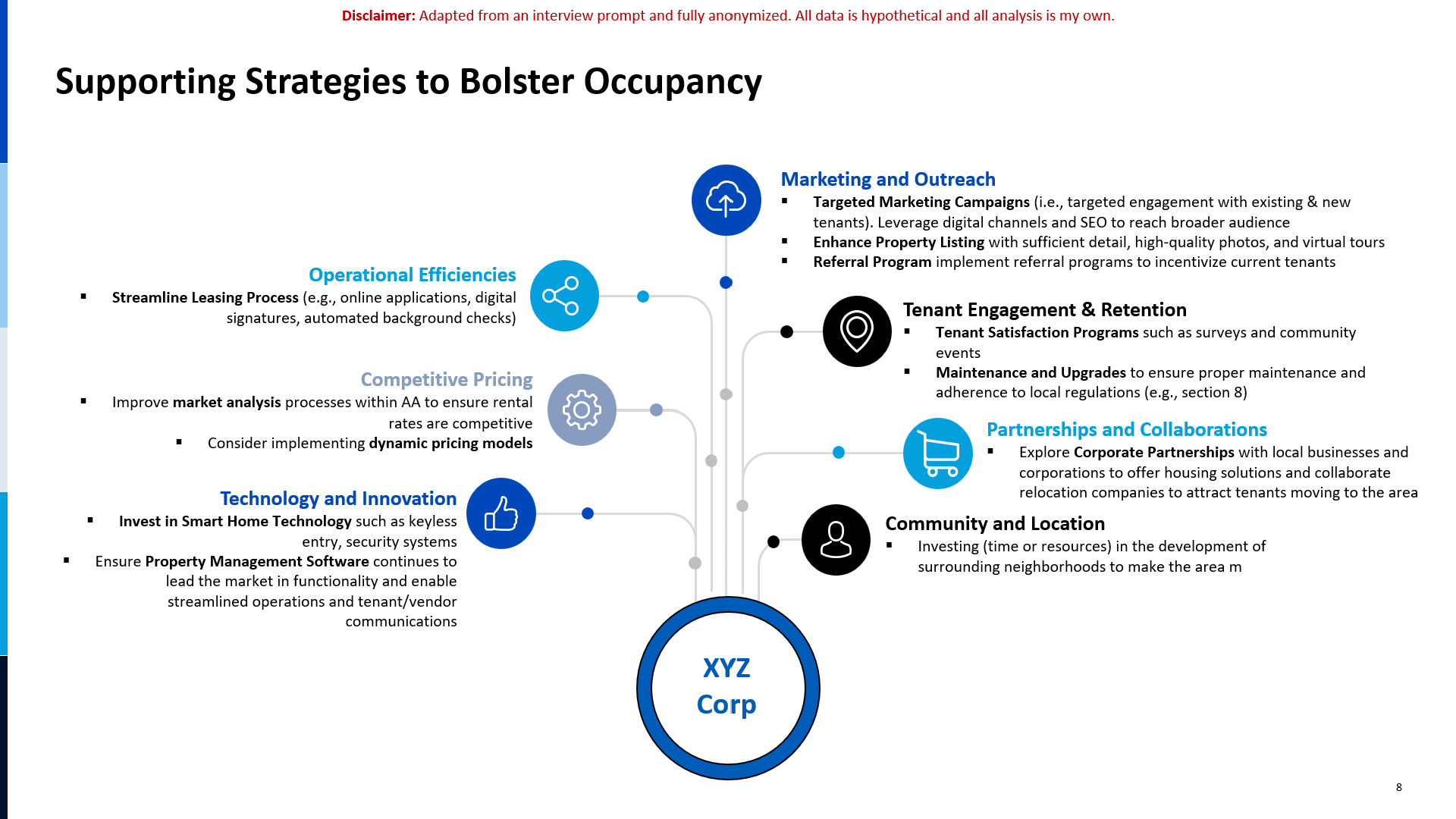
I began by diagnosing why occupancy lagged. Through a structured breakdown of vacancy types (turn, rental-listed, pending move-in, and occupied). I identified that the largest gap came from turn-related downtime rather than listing or leasing performance. I proposed a rapid root-cause diagnostic and targeted interventions focused on turn-time reduction, backlog cleanup, and localized fixes for the bottom 20% of homes driving 37% of days-on-market. I also recommended complementary levers across pricing, marketing, retention, and move-in workflow optimization to close the occupancy gap.
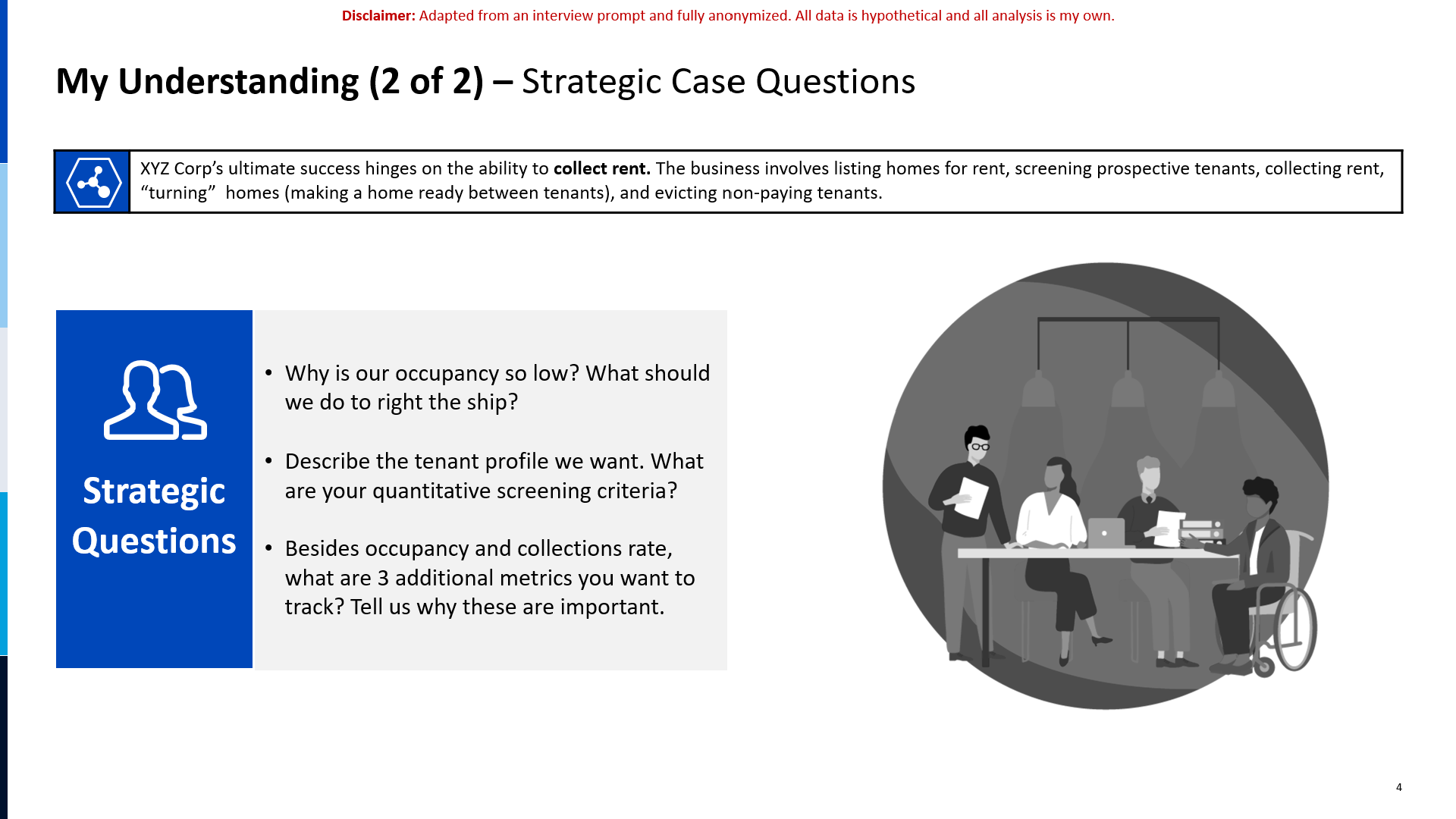
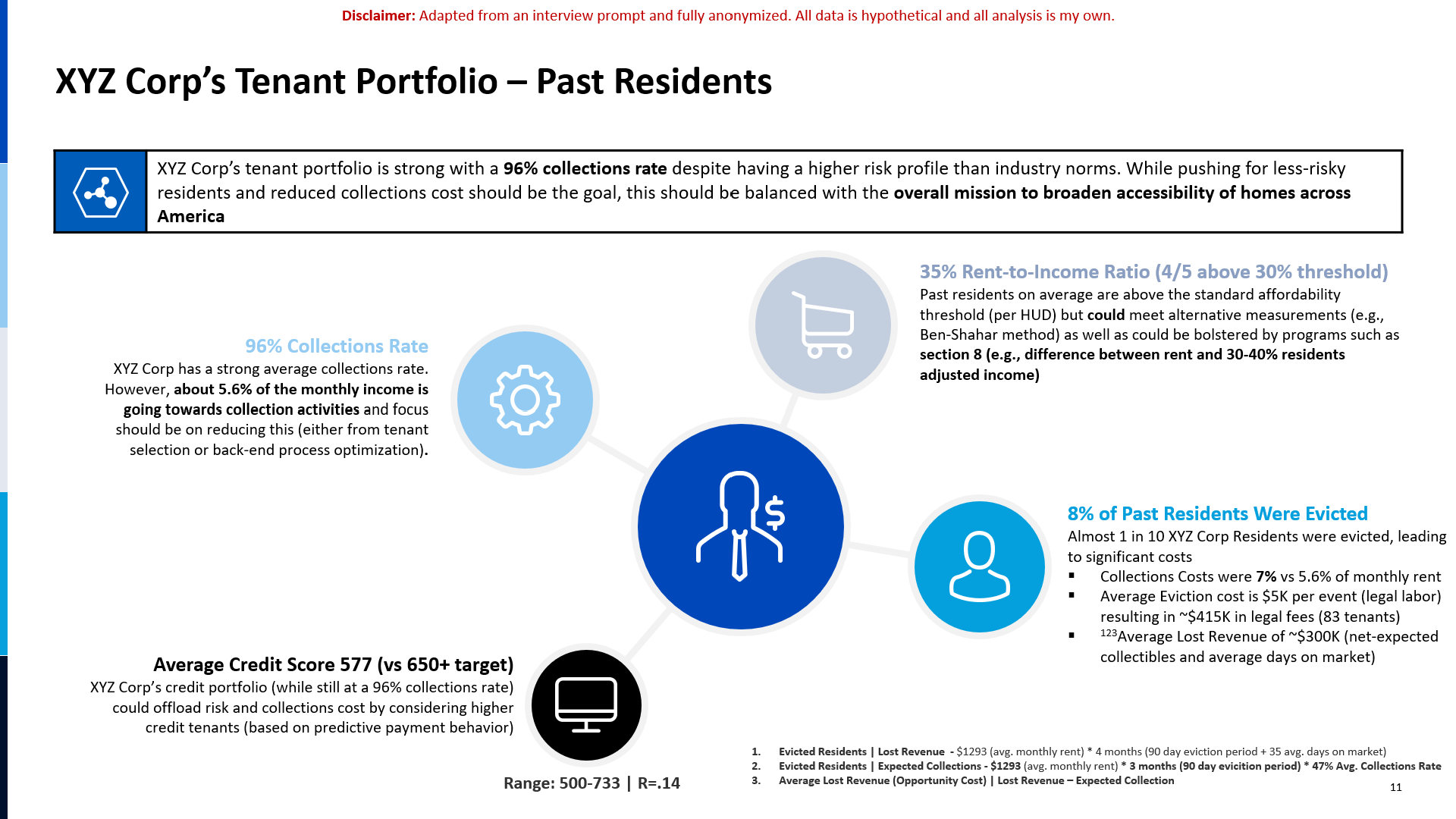
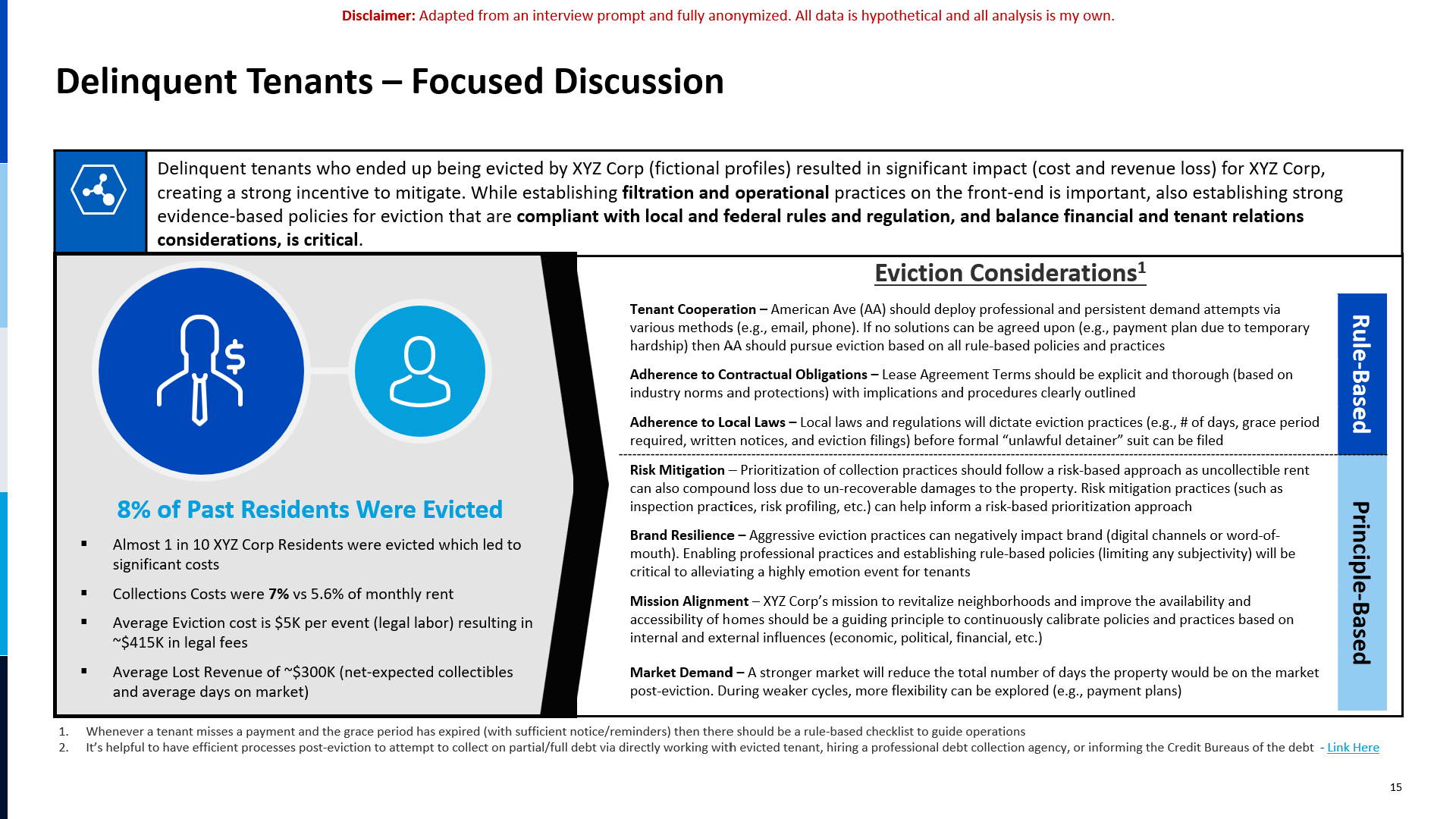
My analysis surfaced affordability challenges, a 96% collection rate with elevated collection costs, and an 8% eviction rate, each creating operational drag. I proposed refined underwriting criteria, the incorporation of HUD affordability thresholds, and strategic use of Section 8 and AMI-based income benchmarking to expand the pool of reliable tenants without increasing risk.
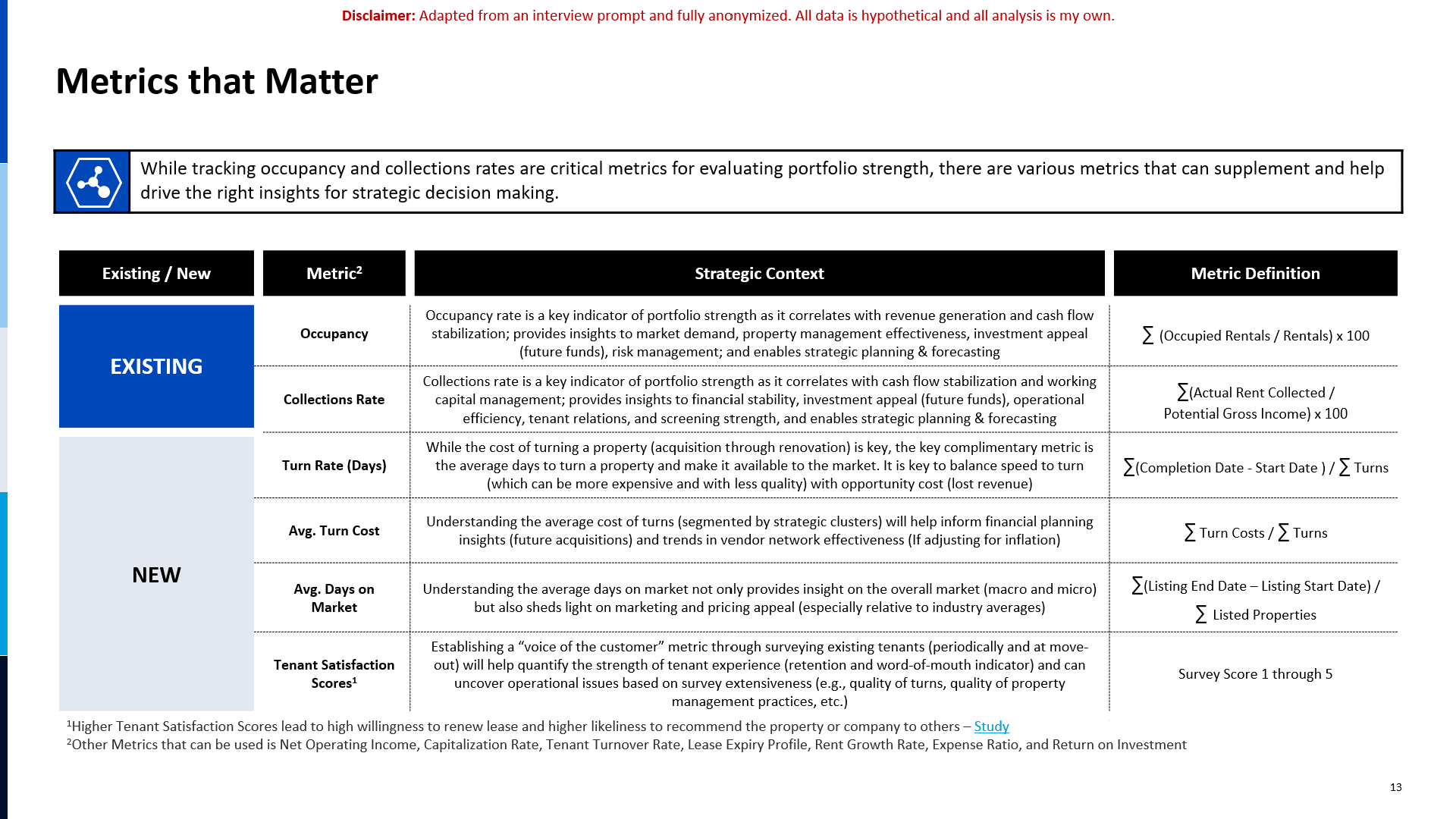
I also identified additional “metrics that matter,” including tenant satisfaction, turn efficiency KPIs, and eviction-related cost leakage, each critical for understanding portfolio health, renewal probability, and NOI impact.
For the deep-dive portion, I developed a tactical roadmap to move occupancy from 80% to 95%, centered on five pillars: turn-time acceleration, retention and renewal strategy, localized pricing optimization, targeted marketing for difficult homes, and operational discipline around move-in readiness. This combined data-driven insights with scalable operational mechanisms aligned to XYZ Corp’s software-enabled operating model.
Disclaimer: Adapted from an interview prompt and fully anonymized. All data is hypothetical and all analysis is my own.
Disclaimer: Adapted from an interview prompt and fully anonymized. All data is hypothetical and all analysis is my own.
Mock Case Study - Technology (SaaS) Organization
XYZ Corp (a fictitious global SaaS company providing crime-intelligence and prevention tools for large retailers) was asked to analyze a 6-week, 35-store pilot and build an executive-ready business case showing why a major U.S. supermarket chain should expand to a long-term, 1,000-store agreement. The challenge centered on replacing the retailer’s legacy process (Google Forms) with XYZ Corp’s real-time incident reporting platform and quantifying the value generated through higher-quality data, faster uploads, and reduced retail loss.
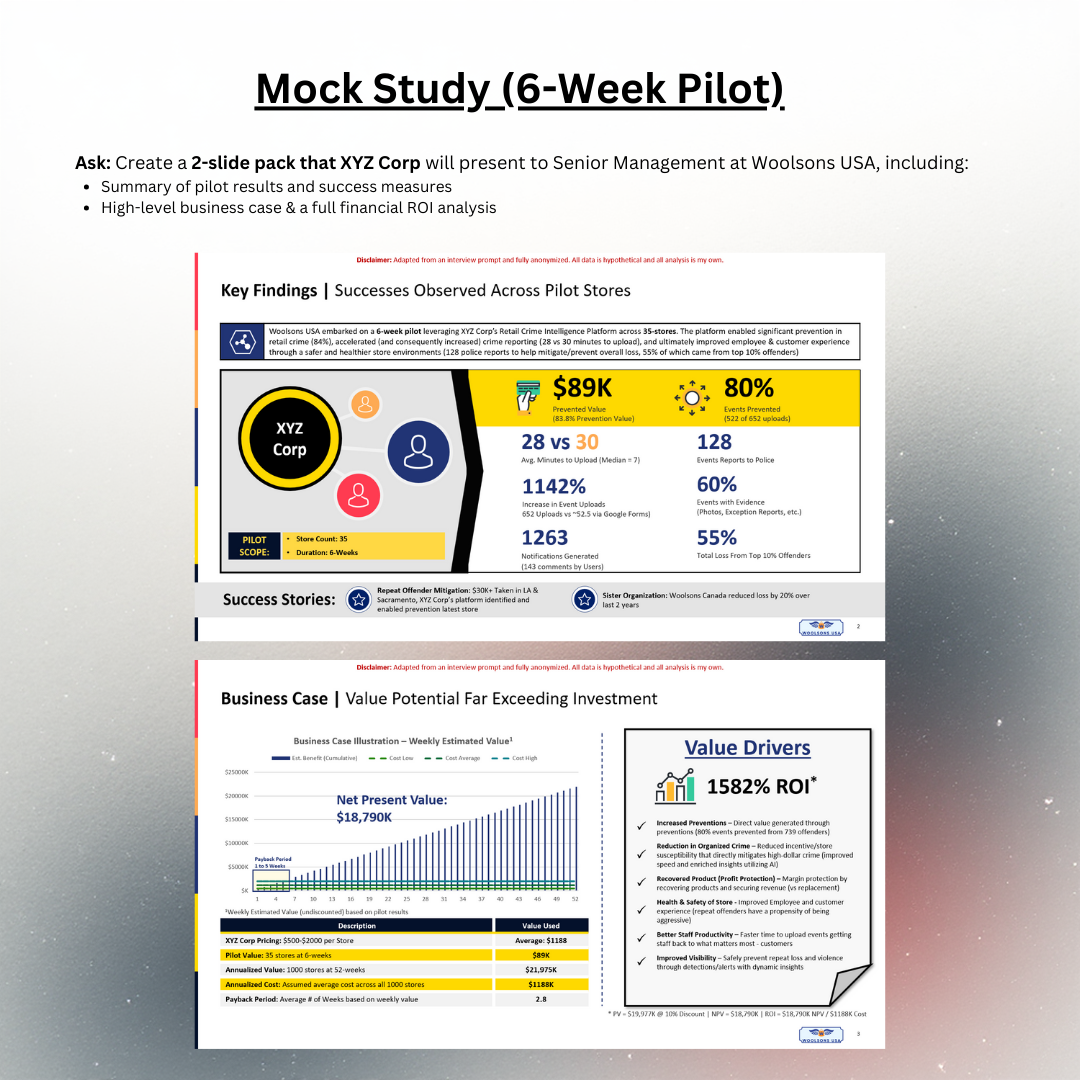
I began by synthesizing the pilot’s operational results, which demonstrated significant performance lifts compared to baseline: a 1,142% increase in event reporting, 80% event prevention rate, 60% of events captured with high-quality evidence, and over 1,260 notifications generated to front-line teams. These insights highlighted not only the platform’s usability but its material impact on incident visibility and accuracy. From these metrics, I constructed a value narrative centered on reduced shrink, higher case solvability, faster collaboration with law enforcement, improved staff productivity, and safer stores.
To translate the pilot outcomes into a defensible ROI, I built a full financial model using prevented value as the value metric, extrapolating the pilot results into a full-fleet estimation (annualizing the 6-week value and extending value from 35 stores to 1000 stores). This analysis showed a 1582% ROI, a 1–5 week payback period, and substantial long-term value whether the retailer expanded conservatively or aggressively. I reinforced the story with real examples from the pilot, including repeat offenders identified across multiple cities and major theft incidents prevented through cross-store linkage. I also noted a key assumption in that the 35 stores selected are representative of the 1,000-store fleet (i.e., shares similar risk/shrink profiles).
I then drafted a concise 2-slide executive presentation and supporting narrative for leadership discussions. The flow balanced analytical rigor with commercial storytelling: establishing credibility, contextualizing the data, and clearly articulating the operational and financial reasons that expansion was the superior path.